Trump brings 16 CEOs to China: reading the supply-chain code correctly
The May 2026 Beijing trip should not be read as diplomacy with a few CEOs attached. It shows AI, electricity, chips, robots and space collapsing into one new map of power.

Source: Wikimedia Commons
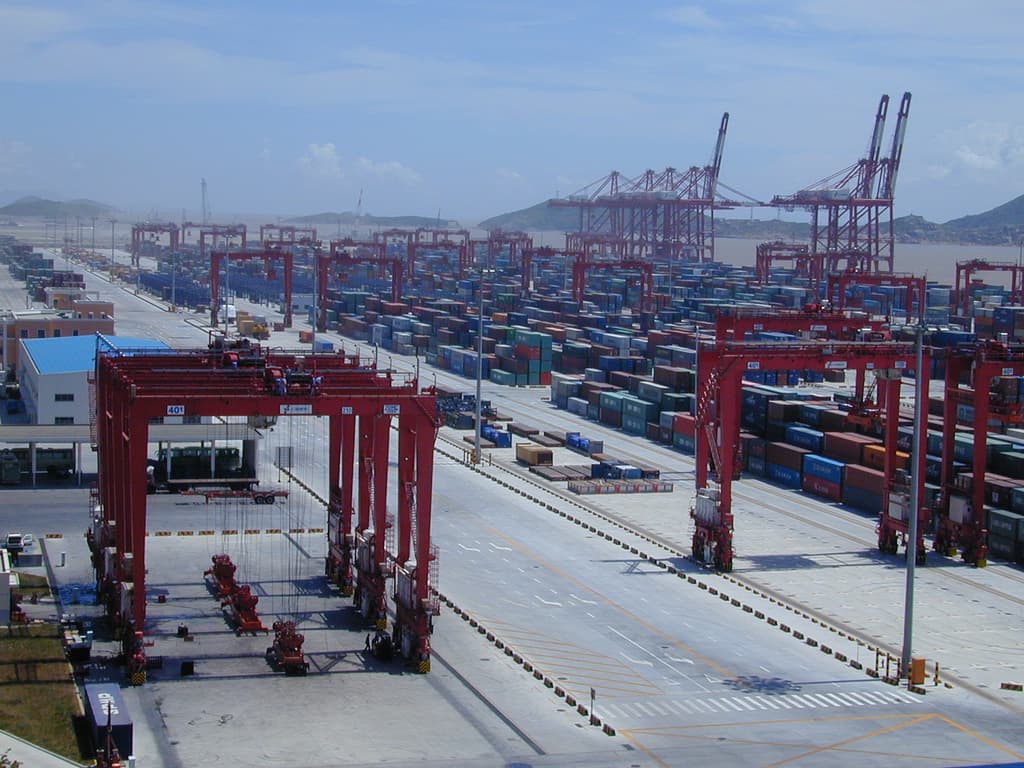
In May 2026, when Donald Trump entered Beijing with a group of major American CEOs, I did not read it as a normal trade visit. Whether the press counted 16 or 17 executives is not the point. The point is that the people running companies across compute, phones, EVs, finance, aerospace, chips, cloud and distribution showed up together inside the world's most important manufacturing arena. This was not just a diplomatic photo. It was a supply-chain photo.
For years, the world has talked about decoupling, friend-shoring and de-risking. The language sounds clean. But CEOs do not make decisions with slogans. They make them with P&L, capex, production capacity and rollout speed. Nobody wants dependency. But nobody wants to cut themselves off from the place that still owns too many irreplaceable links. That is the supply-chain code: the new power does not only belong to whoever has the model, the brand or the policy. It belongs to whoever controls the bottlenecks the whole system must pass through.
Source: Wikimedia Commons
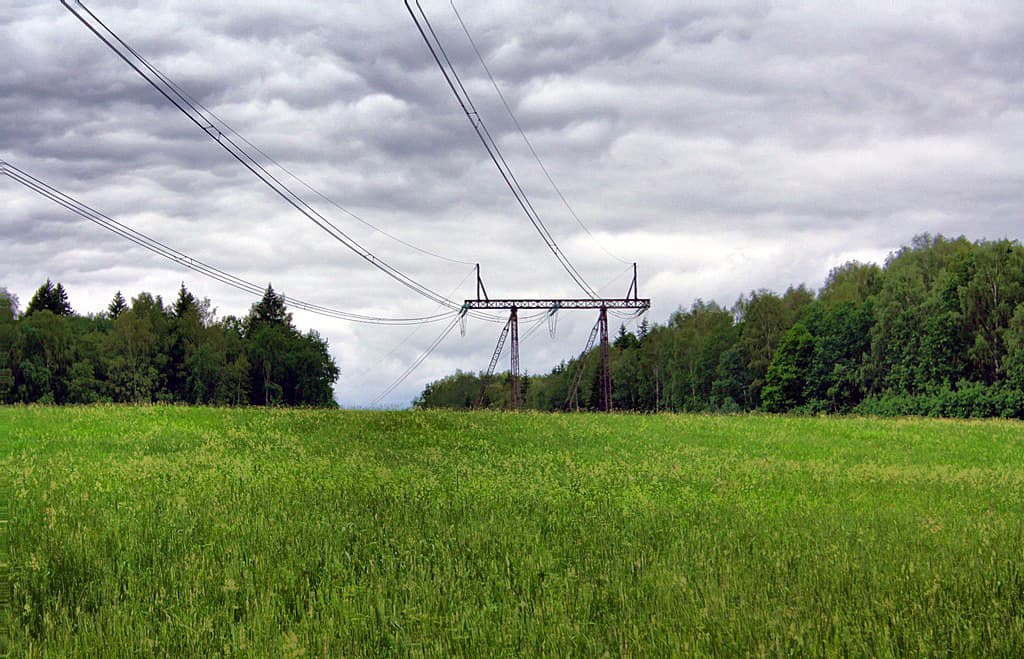
First takeaway: AI consumes electricity before it consumes the world. Many people still talk about AI as if it is software floating in the cloud. That is wrong. The stronger AI gets, the more visible the physical layer becomes: data centers, chips, cooling, substations, transmission grids, long-term power contracts and reliable energy supply. A country can have brilliant engineers, but if it cannot deliver cheap, stable power to compute, its AI capacity gets choked at the infrastructure layer.
Computing and power synergy is not a pretty slogan. It is the operating principle of the AI era. Bits and watts have merged. Google needs data centers optimized around grid behavior. Tesla understands batteries, EVs, energy storage and load orchestration software. When these layers connect, the message is clear: AI dominance is not only about better algorithms. It is about better energy coordination. The same logic applies to eCommerce. A company does not win because it has an AI tool. It wins when AI is wired into real operating infrastructure: data, inventory, fulfillment, support, finance, creative testing and feedback loops.
Source: Wikimedia Commons
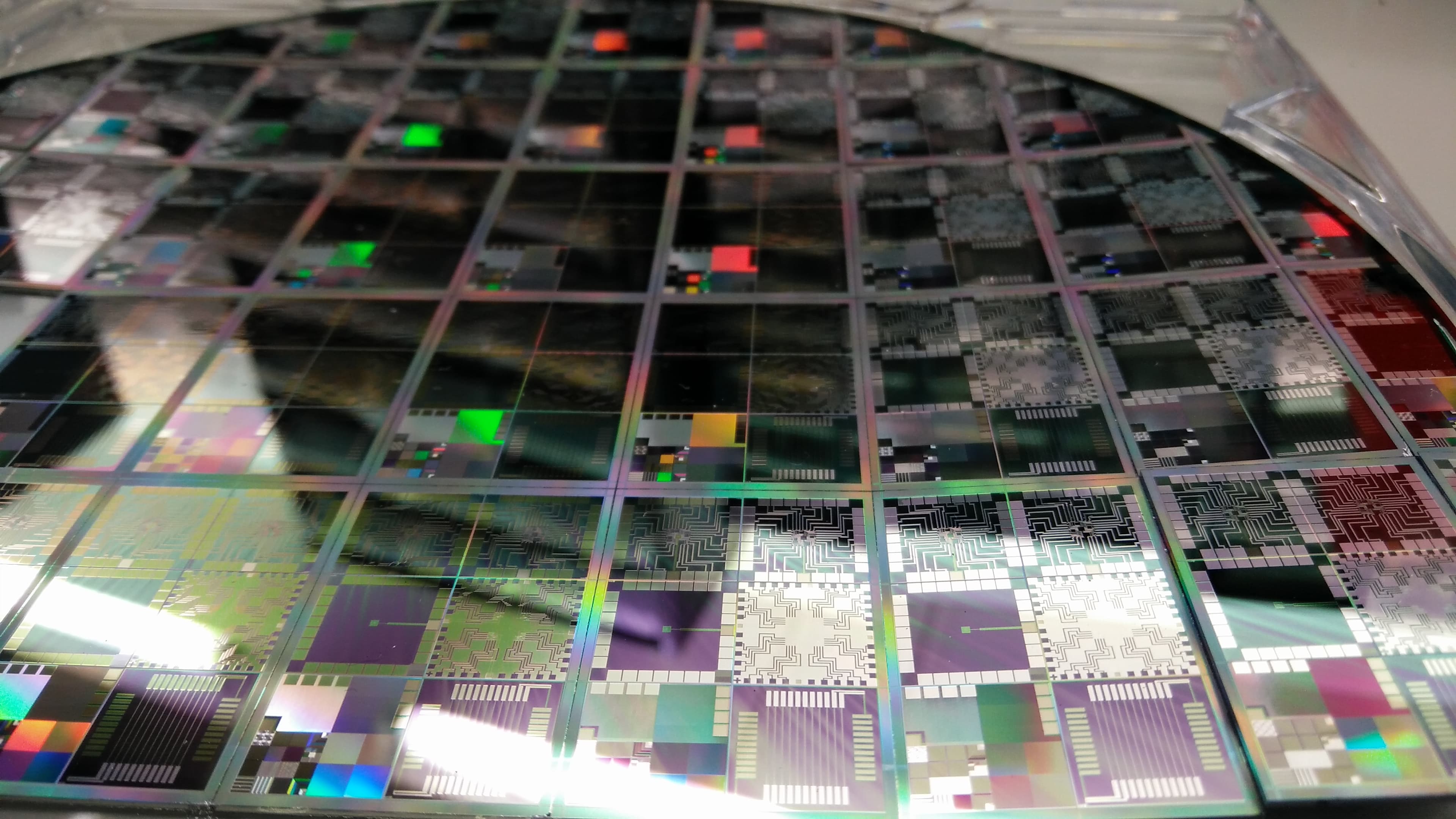
Second takeaway: stop staring only at 3nm or 2nm. That is the easiest layer to see, so it becomes the layer everyone obsesses over. As transistor shrinking approaches physical limits, the bottleneck moves to packaging, substrates, heat and interconnect density. Glass substrates in semiconductor packaging matter because they point directly at that constraint: AI chips need more data movement, more heat control and more connection density inside a space that is increasingly hard to expand.
In other words, the future of Moore's Law is not only lithography. It is materials science. Whoever controls substrates, advanced packaging, thermal management and manufacturing yield will have a much bigger say in the value chain. There is a practical founder lesson here: when everyone is looking at the shiny layer, ask where the constraint is. Profit usually is not where the crowd is shouting. It is at the point where everything above it stops working without it.
Source: Wikimedia Commons
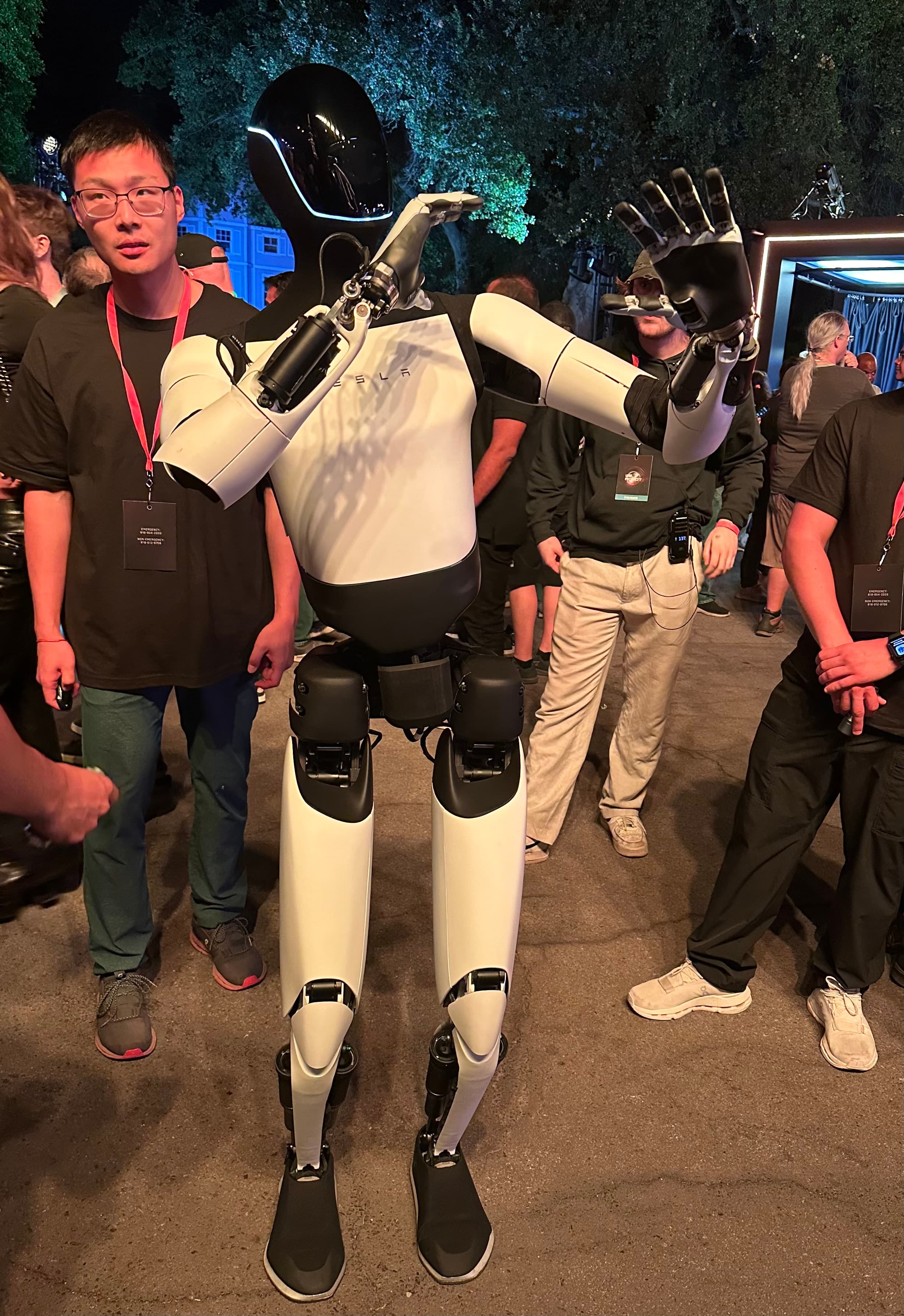
Third takeaway: humanoid robots are moving from demo stage into mass-production logic. Robots appearing at the 2026 Spring Festival Gala was not just a media stunt. It showed that society is starting to accept robots as a more normal part of the environment. When Tesla Optimus Gen 3 and related component supply chains are discussed together with mass production, the question is no longer whether robots are interesting. The question is who can manufacture them cheaply enough, durably enough, accurately enough and fast enough.
Names like Sanhua Intelligent Controls matter because a robot is not built by one company alone. It is built by motors, actuators, thermal systems, sensors, batteries, control systems, manufacturing lines, software stacks and hundreds of smaller suppliers behind the scenes. The robot on stage is the visible part. The supply chain decides whether it scales. For eCommerce and smart manufacturing, embodied AI may start much closer than people think: warehouse picking, packing, QC, returns, studio operations and fulfillment. Humanoid is the symbol. The automation loop is what founders need to read.

Source: Wikimedia Commons
Fourth takeaway: space is no longer just a rocket story. It is becoming the next infrastructure layer for compute, energy and connectivity. When China files for very large megaconstellations, with some international filings reaching hundreds of thousands of satellites, the message is not simply that it wants a few more satellite internet services. The message is that the sky is also a distribution layer.
Ideas like Moon Slingshot or space PV still need project-by-project verification, but they point to a useful direction: if compute needs power, and data needs networks, orbit becomes an extension of the economy's infrastructure. Solar panels, materials, launches, ground stations, laser communication and orbital edge compute start to connect. Musk needs scaled manufacturing. China owns many links in PV and industrial production. SpaceX has launch capability and a vertically integrated vision. Politically, these systems are tense. Technically, they pull toward each other. That is the paradox of the modern supply chain.

Source: Wikimedia Commons
Fifth takeaway: the state banquet was not just ceremony. Seeing Elon Musk, Tim Cook and senior Chinese tech leaders inside the same room says something cold: real power does not like simple stories. Apple can talk about privacy, design and ecosystem. Tesla can talk about AI, robots, EVs and energy. Baidu, Xiaomi and other Chinese companies can talk about models, devices, cars, cloud and manufacturing. But behind every narrative sits an old question: who can make it, quickly, at the right cost, at the right volume and on deadline?
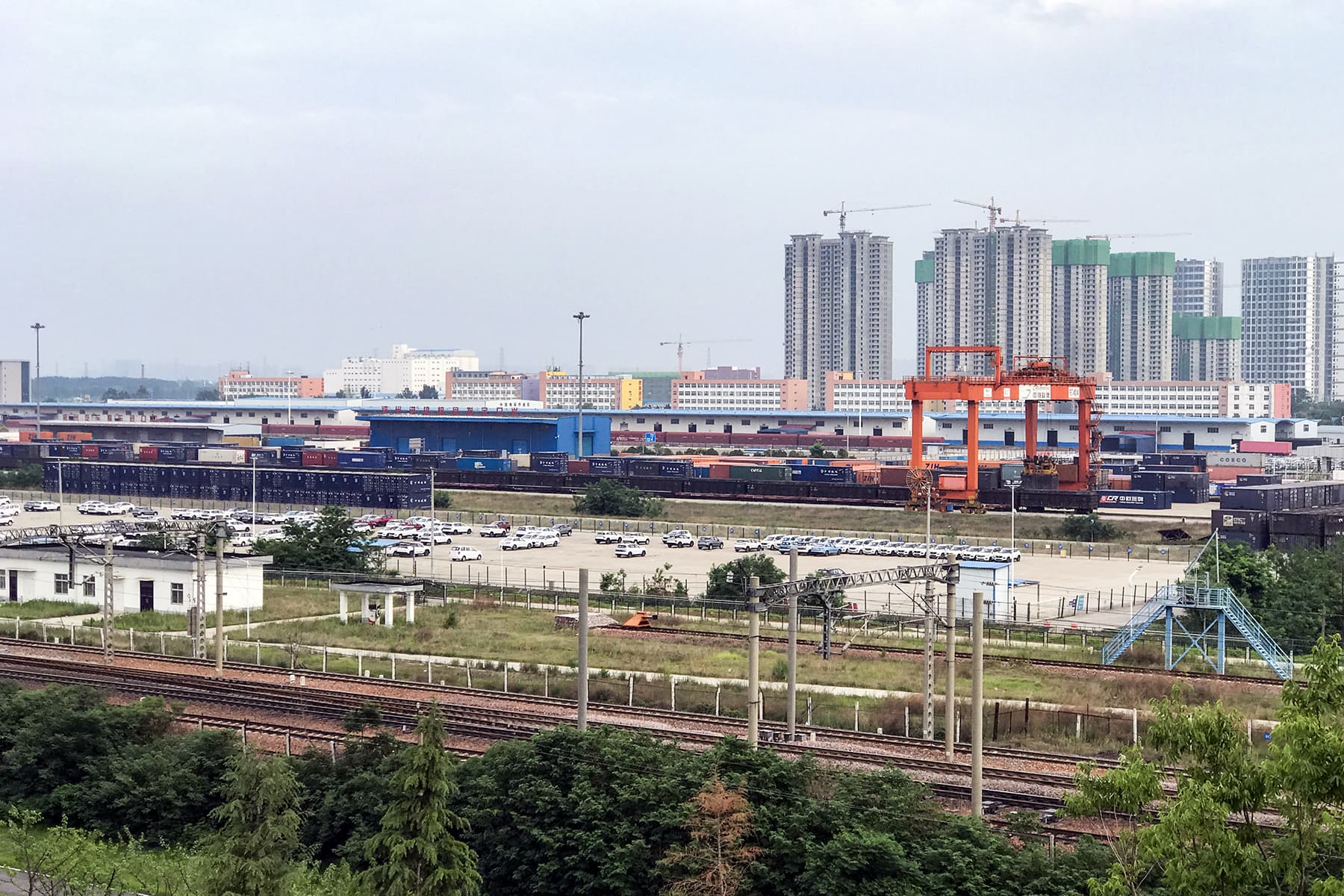
The line that “the United States is number one, while numbers two to ten in supply-chain capability are almost all China” is probably too blunt if treated as an official ranking. But as an operator's instinct, it is worth taking seriously. The United States remains strong in chip design, cloud, models, capital, software, brands and startup ecosystems. China is strong in manufacturing depth, supplier density, tooling speed, cost, application engineering and the ability to drag ideas down into factories. The winner is not necessarily the one shouting independence the loudest. The winner knows where to be independent and where to stay connected.
Source: Wikimedia Commons
My conclusion is simple: the world is not splitting cleanly the way strategy decks suggest. It is restructuring. Chips, electricity, robots, space, EVs, AI agents, software and manufacturing are merging into a new stack. Inside that stack, no country or company can do everything alone and still move at maximum speed. Self-reliance matters. But absolute self-reliance may be a very expensive illusion.
The lesson for Vietnamese founders is not to pick a side in a game this large. The lesson is to read the bottlenecks correctly. In your own business, which link would stop the whole system if it broke? Customer data? Distribution? Suppliers? Creative testing? Fulfillment? Brand trust? Cash conversion cycle? AI workflow? If you cannot answer that, you are just being pulled around by geopolitical headlines. If you can answer it, you start to know where to build the moat. The new era does not reward people who shout independence. It rewards people who can coordinate the strongest resources, hold an irreplaceable link, and stay sober enough not to confuse narrative with real capability.