China AI has moved from models to distribution
From Qwen, MiniMax and DingTalk Agent to XPeng and home robots, China AI in May 2026 shows the game moving beyond benchmarks into distribution.
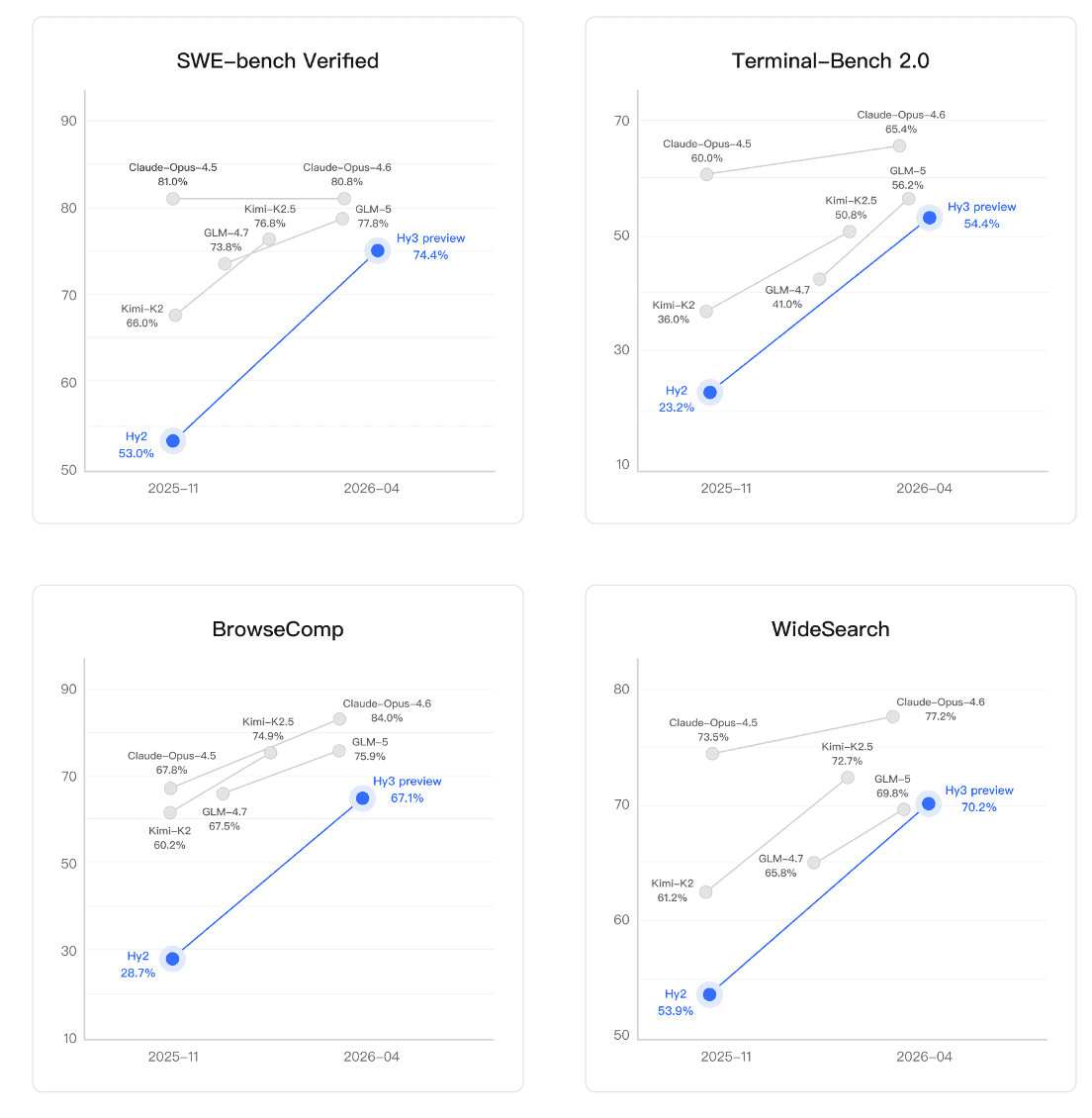
Source: Pandaily
There is an easy way to misread China AI: keep asking which model beat which model. Qwen 3.5, Intern-S1-Pro, MiniMax M2.7, and Meituan testing a trillion-parameter model are big enough names to pull the whole conversation toward benchmarks, parameters, reasoning, and multimodal capability. But the more important signal in the Pandaily May 2026 deck is not that China has more models.
It is that Chinese companies are pulling AI out of pure model competition and into distribution: cloud, enterprise apps, command line tools, glasses, earbuds, rings, phones, cars, robots, agent communities, capital markets, and hardware supply chains. When these layers move together, AI stops being a demo and starts becoming operating infrastructure.
Source: OpenRouter
The deck says MiniMax M2.5 once reached 3.07 trillion tokens per week on OpenRouter. That number should be verified against the original source before being treated as a hard claim, but the signal is clear: real usage is becoming more important than online applause. Benchmarks show a model can be strong.
Usage shows whether developers and users are putting it into real work. The agent section matters even more. Baidu has DuMate, Alibaba is preparing enterprise agents on DingTalk, MiniMax has MMX-CLI, and Meituan is testing MiYou.
The pattern is that AI is moving from answering to executing. Chatbots answer questions. Agents run workflows.
Without a clear workflow, agents just create garbage faster. With a clear workflow, they become leverage.
Source: Pandaily
The hardware layer points in the same direction. Alibaba/Qwen is preparing AI glasses, AI earbuds, and a smart ring. ByteDance sold out the first Doubao Phone and is working on the second generation with ZTE.
XPeng is putting its Turing AI chip into the 2026 MONA M03, with 750 TOPS and up to 640 km of range according to the deck. The better question is not which device wins. The better question is where the next AI touchpoint lives.
If AI moves into glasses, earbuds, cars, phones, and wearables, commerce discovery changes. Product listings will need to be clean enough for agents to understand who the product is for, what pain it solves, what proof exists, what makes it different, and what risks or policies matter.

Source: XPENG
Robots are easy to hype, but they should not be ignored. Galbot's LDA-1B and X Square Robot's WALL-B point toward embodied AI: taking AI from language and images into the physical world. For eCommerce, this does not have to start with humanoids.
It can start in warehouses, QC, returns, product photography, livestream studios, and fulfillment. The capital layer matters too. Tencent, Zhipu AI, XPeng, and WUS Printed Circuit show AI touching capex, IPOs, R&D, EVs, PCBs, servers, and supply chains.
Vietnamese founders do not need to copy China. But they can copy the stack thinking. A small company does not win by owning its own model.
It wins by putting AI into the right operating loops faster than competitors. Capability creates attention. Distribution creates power.